Commerce, Culture, and Connection: A Recap of the May 2026 Meeting
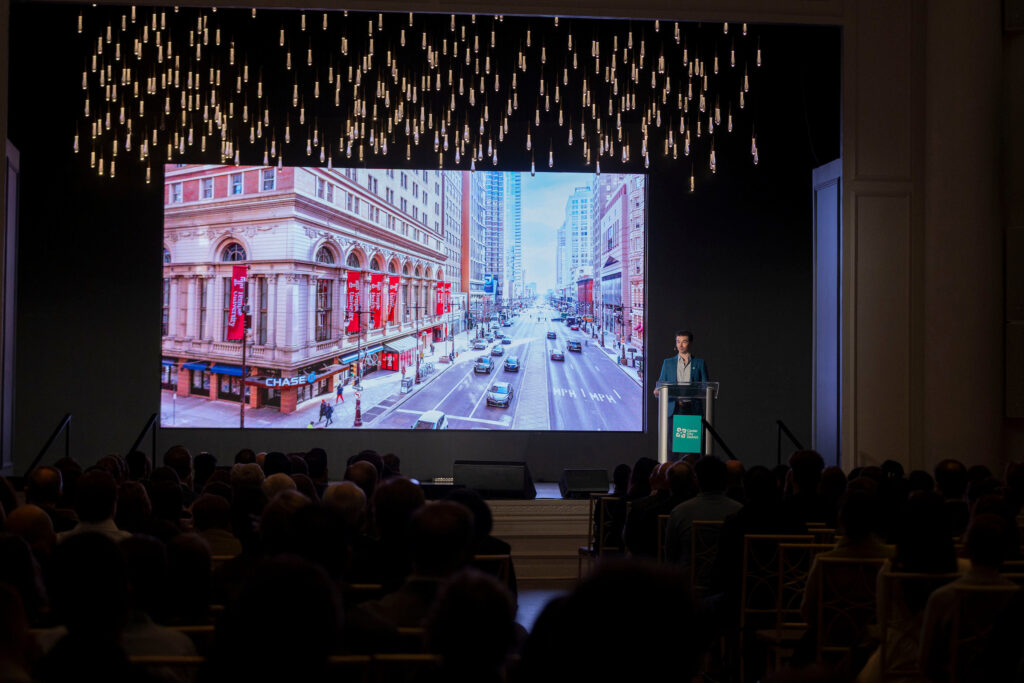
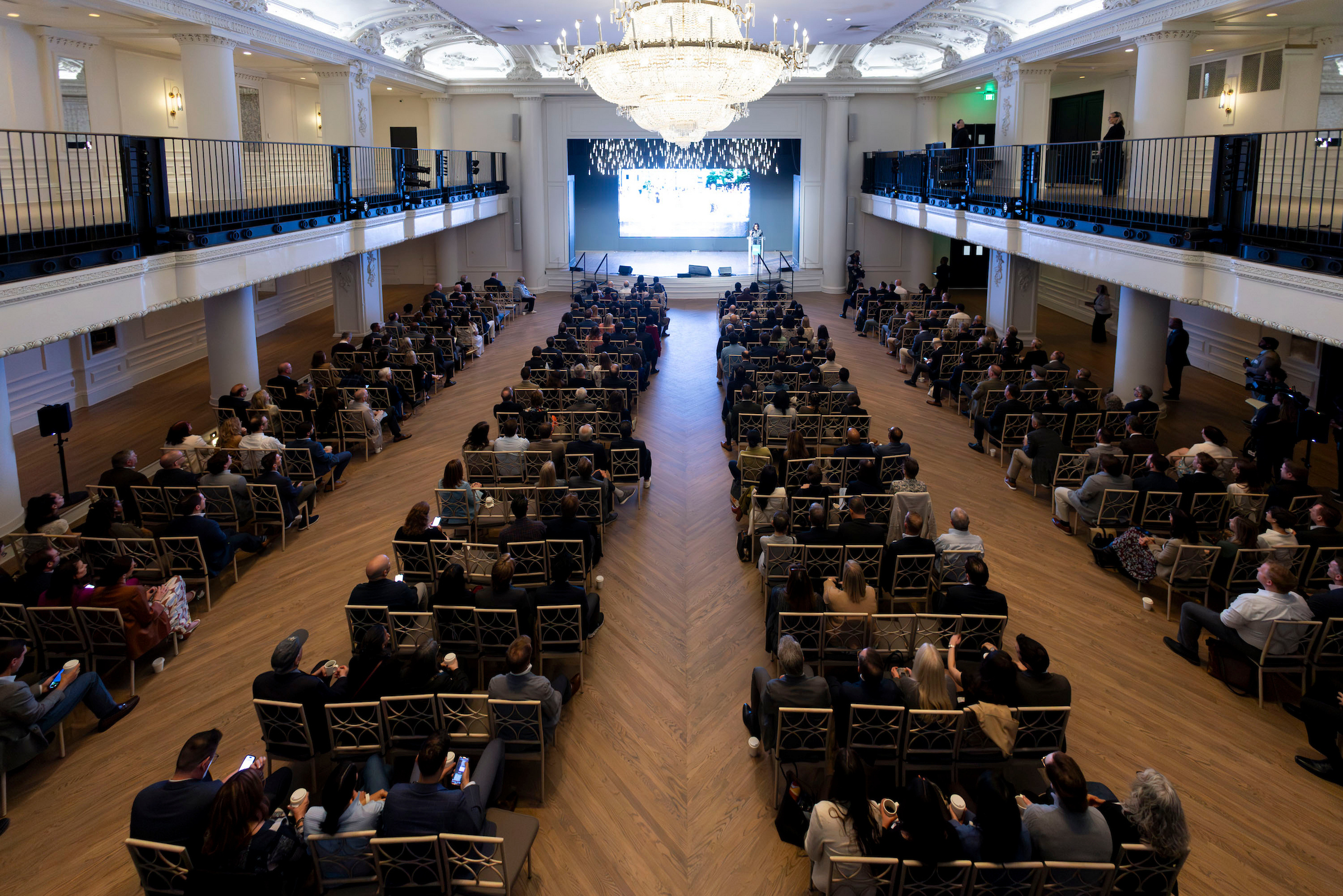
Discussions at the meeting featured highlights of CCD’s work and vision by President & CEO Prema Katari Gupta, updates on the opportunities and challenges of our downtown by Vice President of Economic Development Clint Randall, and a panel discussion on the future of Center City with three civic leaders:
- John Fry, President of Temple University;
- Dean Adler, real estate developer and investor in Center City; and
- Marc Bruno, COO of Aramark
The event was supported by presenting sponsor Aramark, and associate sponsors Allied Universal, BDO, Brown and Brown, Savills, Urban Engineers, and the Lightning Practice. Read along for highlights from this year’s program and learn more about how you can get involved with CPDC.
The People Behind the Work
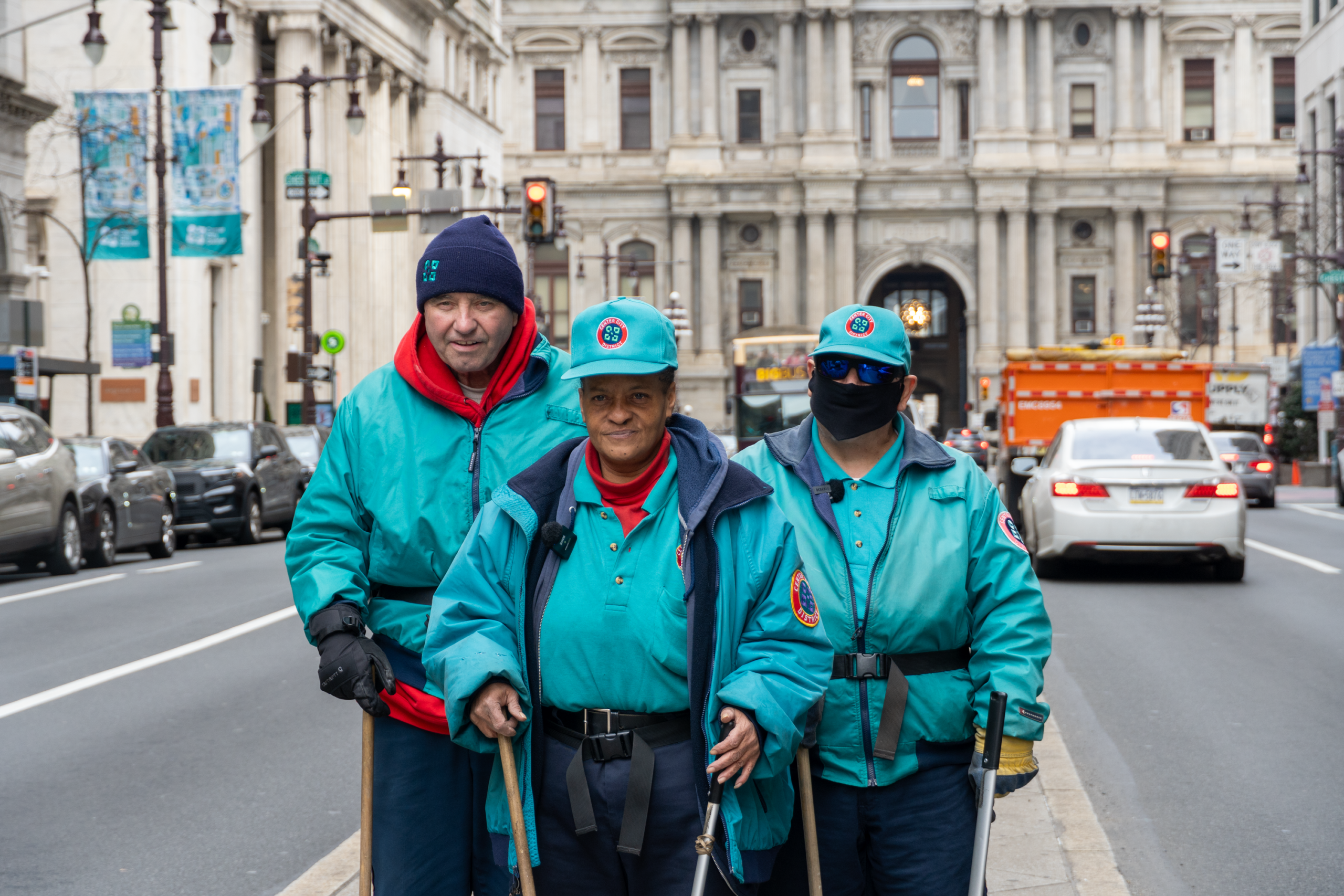
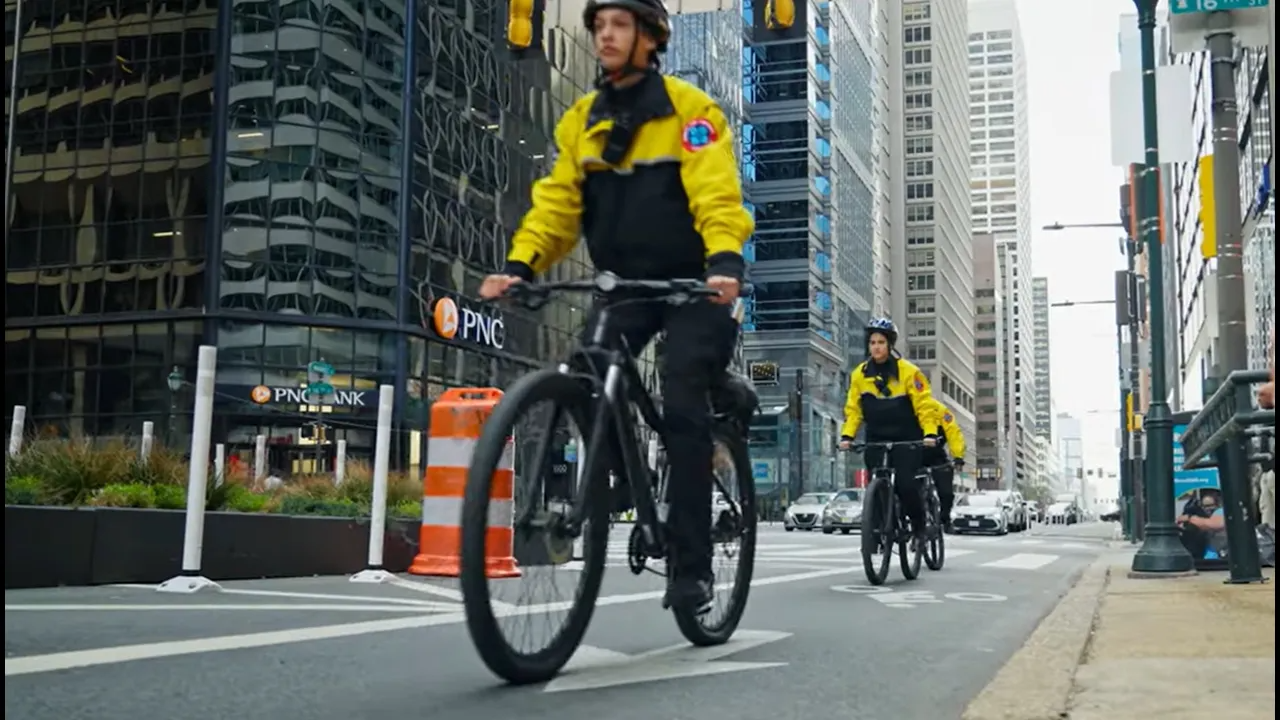
Prema opened by grounding the audience in what makes CCD’s work possible: its people. She shared the stories of several team members whose daily dedication keeps the district running, like Sherron Dudley, who has swept Center City sidewalks for 35 years and Martina Vincent, who leads our bike patrol. Other stories included:
- Devoun Wilburn, one of our community service representatives (CSRs), whose team had more than 120,000 conversations with pedestrians last year;
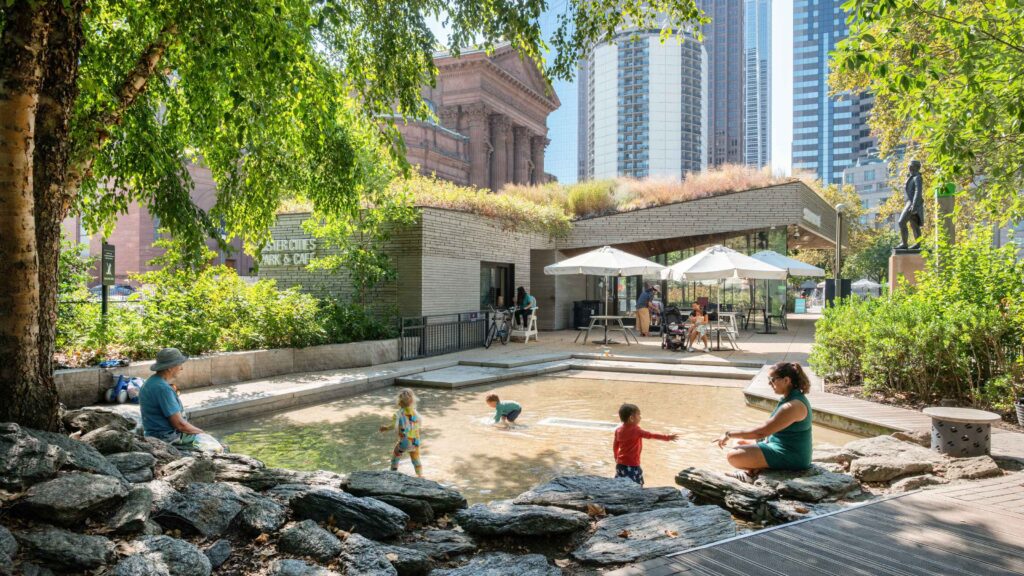
- Terrell Degale-McAllister, one of our staff who maintain Dilworth Park, which welcomed 12.9 million visitors last year; and
- Chrissy Madden, part of the homeless outreach team that connected 205 unsheltered individuals with services in the past year.
In addition to these staff — and the more than 200 CCD staff who keep our downtown running — Prema highlighted one of the newest initiatives from our public safety team: Community Oriented Public Safety (COPS), which welcomes yougn people from the Police Academy’s Explorer program into public safety roles at CCD ahead of their eligibility to join the police academy. The program gives participants real experience in public safety and offers young trainees the opportunity to connect with not only current cops and law enforcement partners, but also the downtown community at large, building a pipeline of future officers who know and care about Philadelphia.
Center City Economic (and Social) Backbone
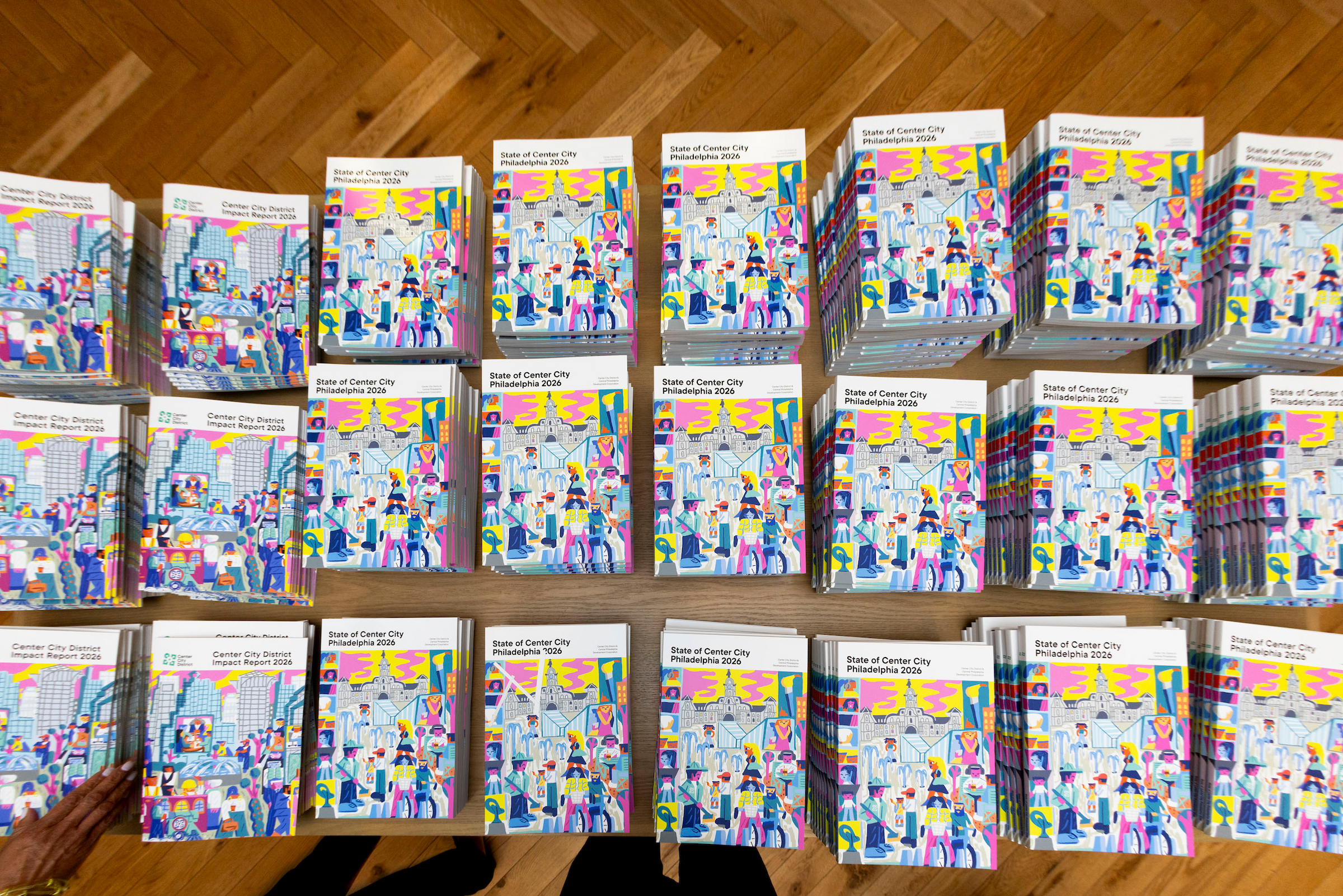
At the start of her remarks, Prema described the report as a “love letter” to Center City that goes beyond the data to tell the full story of why Center City matters to the region.
Beyond its role as a hub for professionals and corporations, Center City is an engine of economic opportunity for the entire region. Our downtown holds 309,000 jobs, more than the combined employment totals of 20 surround Census Designated Places, townships, and boroughs, and half of these jobs do not require a college degree. The wage tax revenue generated in Center City funds services in every neighborhood and council district across the city, making the health of our downtown inseparable from the health of Philadelphia as a whole. Other highlights include:
- Retail occupancy is at a seven-year high;
- Office leasing activity is on the rise; and
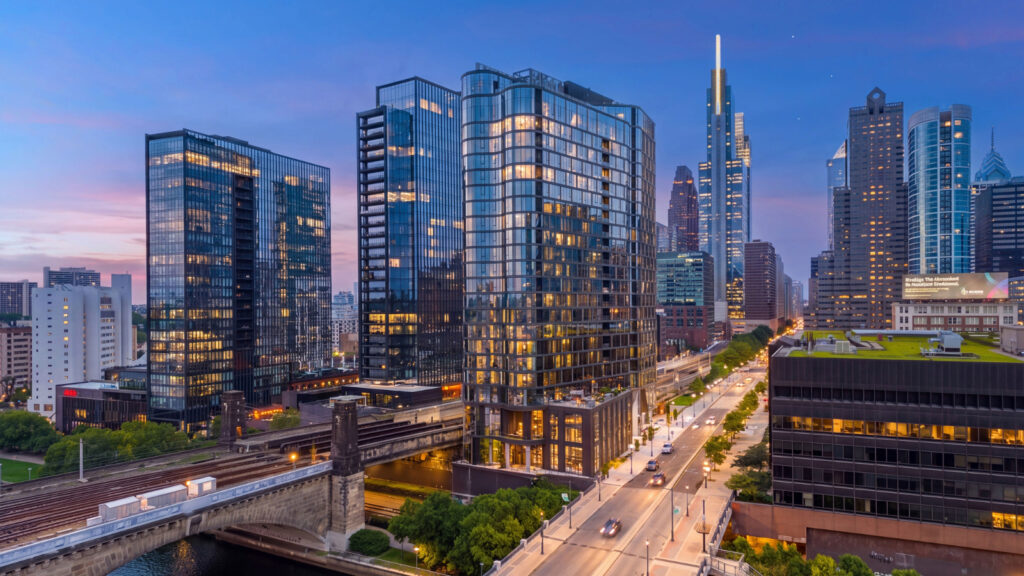
- Housing growth continues to reflect demand
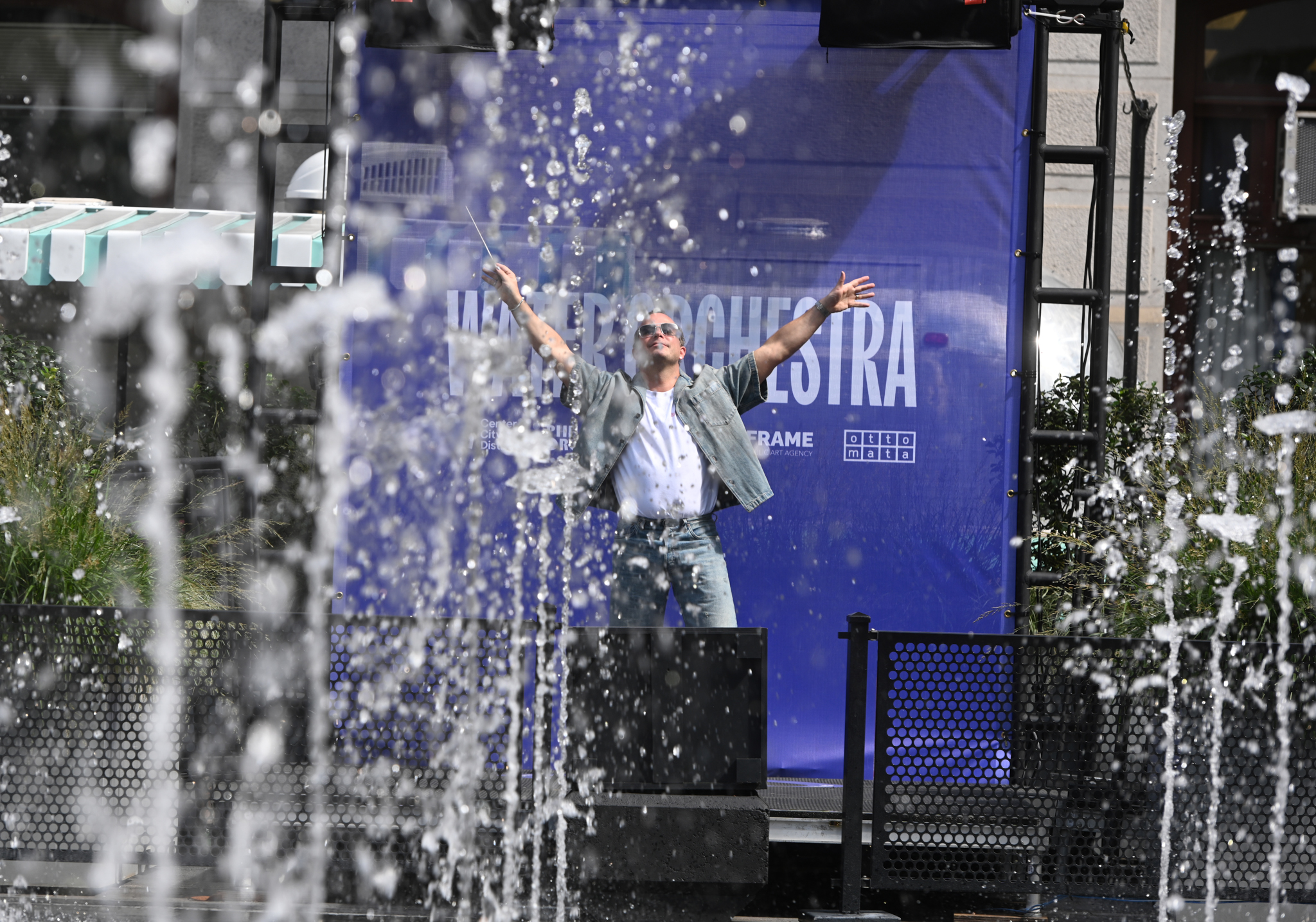
Aside from its economic strength, Center City is also a hub for innovation and social gathering. Last year, Dilworth Park hosted Water Orchestra, a program that showcased how a public space can be transformed by combining art and technology into a one-of-a-kind experience.
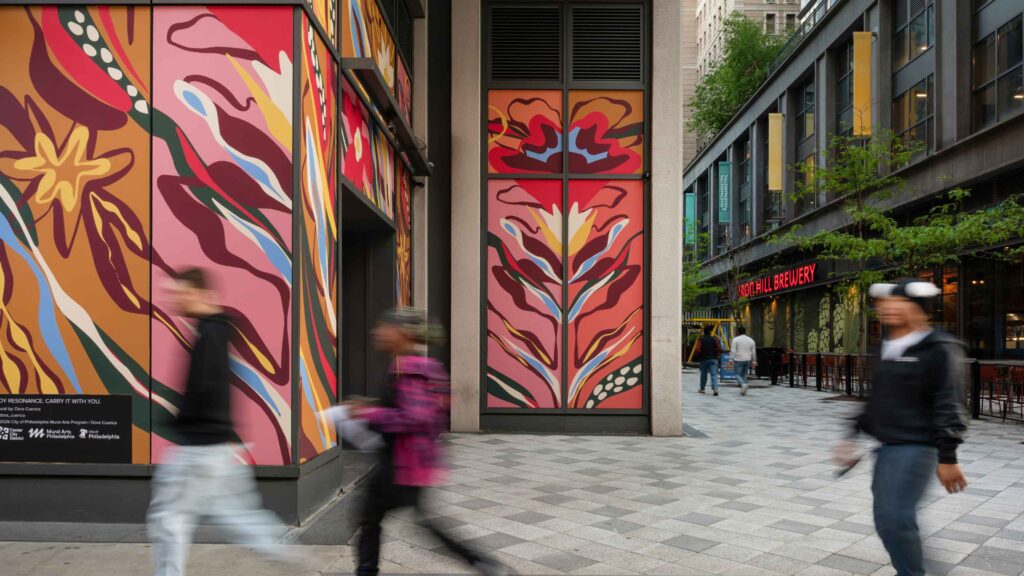
This year, this excitement continues with new initiatives on Market East. CCD has forged partnerships with property owners, civic leaders and the City of Philadelphia to bring new energy to this corridor through temporary retail pop-ups, art installations, and other corridor enhancements. In addition, a new wayfinding system rollout will include updated maps and markers along Market East and the Benjamin Franklin Parkway to make it easier to navigate downtown on foot.
With the FIFA World Cup and America’s 250th birthday both coming to Philadelphia in 2026, Center City is stepping onto the global stage. This is a moment that will shape how the world sees Philadelphia — and how Philadelphia sees itself.
Big Bets on Center City
Following the conversation around the reports, three leaders took the stage to share how and why they are investing in the future of Center City.
Temple University President John Fry discussed Temple’s acquisition of University of the Arts buildings as a mission-driven investment in Philadelphia’s arts and education landscape. Rather than allowing a void to form in the cultural fabric of the city, Temple is integrating programs from multiple colleges into these spaces, ensuring that the arts remain a living part of Center City’s identity. In addition, he noted the way that Temple serves as a means of talent attraction for the region:
“If you came up to North Philadelphia right now and walked on our campus, it’s teaming with talent, and the only thing I’d ask everyone here is just make sure you give my kids a chance in terms of internships and first jobs after graduation. They want to stay here. They’re Philly kids, and they’re getting a great education, but they also need a future here.”
Meanwhile, developer Dean Adler spoke to a vision of building not just individual projects, but campuses, interconnected developments that generate lasting economic and cultural momentum. He called for a collaborative model of development, one that brings the public and private sectors together around a shared vision.
Finally, Aramark COO Marc Bruno offered an employer’s perspective, emphasizing that what keeps his company rooted in Center City, and what attracts and retains talent, is the combination of walkability, culture, cleanliness, and safety: “We certainly believe in experiences. It’s what we do for our partners, and we want to give [our employees] a great experience, so they want to come to work… [by] capitalizing on the walkability, the density of culture and experiences here in Center City and Philadelphia.”
The Full Report
A strong Center City is not something that happens to Philadelphia; it is something Philadelphia builds, together. The conversations throughout the day reinforced how collaboration and continued investment can enhance our downtown — and the city at-large.
For more information about Center City and the data discussed, download the full State of Center City report.
Interested in hearing the perspectives of other business leaders? Learn how you can become a member of the Central Philadelphia Development Corporation and hear from experts who are shaping the future of our downtown.