CPDC Meeting Recap: What Gen Z Means for the Future of Philadelphia
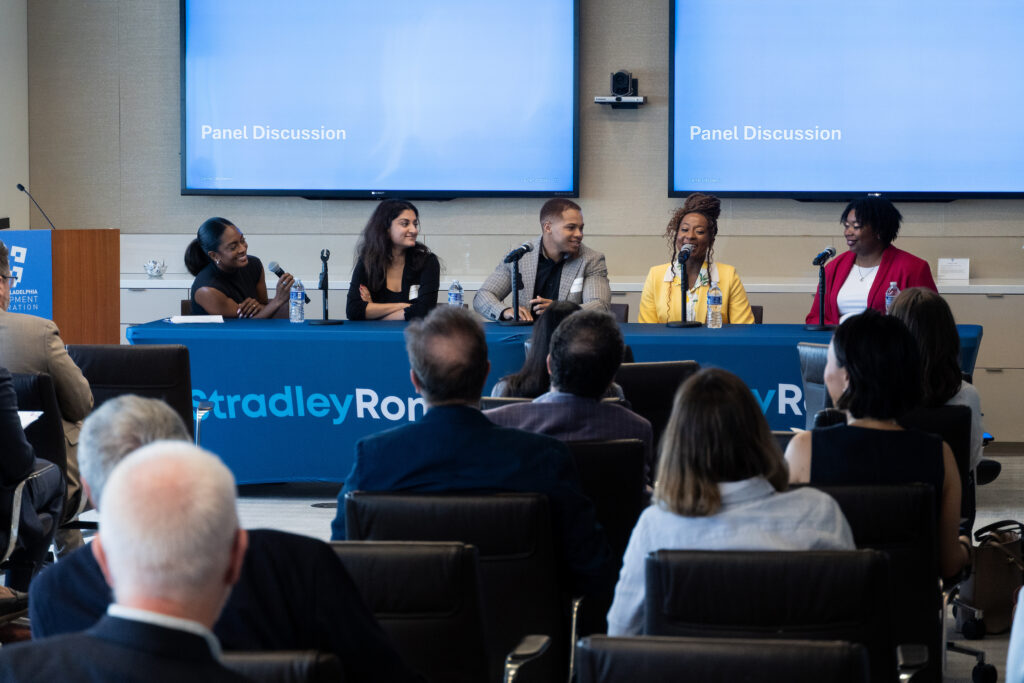
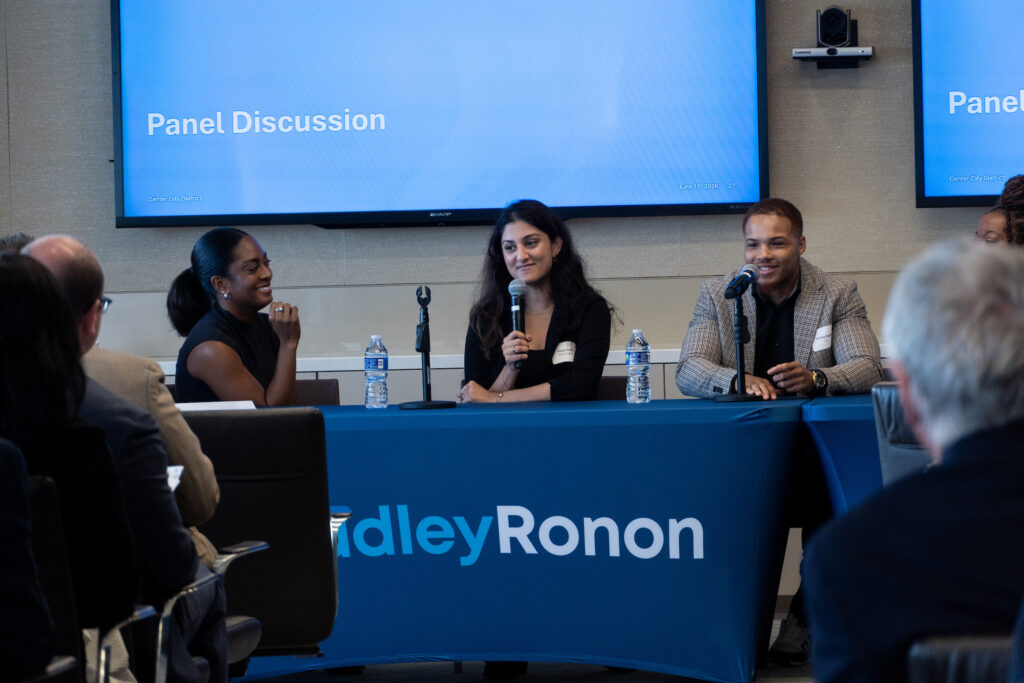
He then turned the floor over to Lauren Smith, Director of Research & Special Projects, who moderated a panel of early-career professionals working across law, commercial real estate, hospitality, and tourism. Together, they explored a generation that is both the most digitally connected in history and, in many ways, the hungriest for the authentic, in-person connection that cities are uniquely positioned to provide.
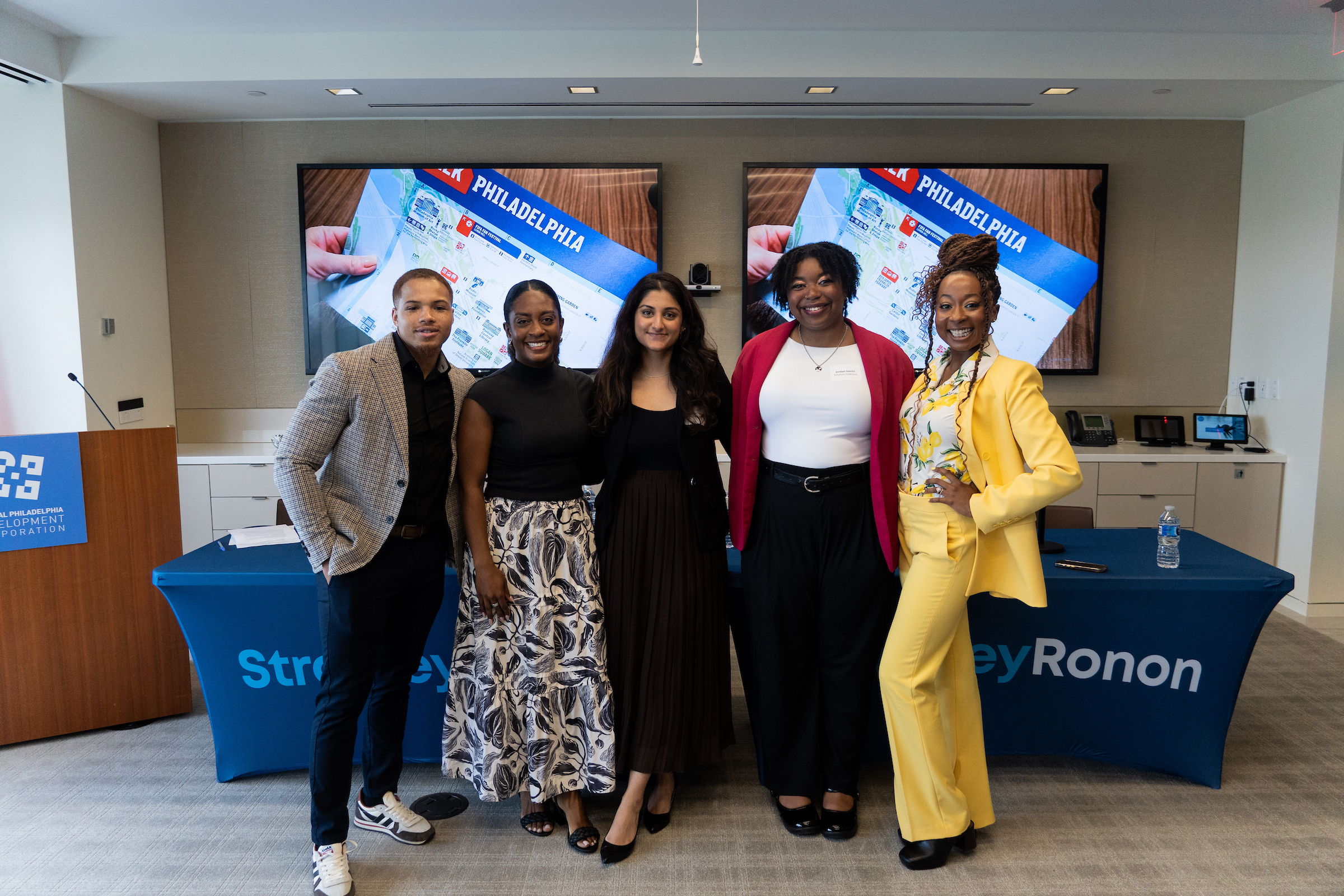
Panelists:
- Daecia-jamé Borgia, Destination Stakeholder Engagement Manager, Visit Philadelphia;
- Phillip Butler, Associate, JLL;
- Jordan Harris, Senior Social & Creative Strategist, Schulson Collective;
- Pooja Patel, Associate, Ballard Spahr; and
- Lauren Smith (Moderator), Director of Research & Special Projects, Center City District
Read along for highlights from this program and learn more about how you can get involved with CPDC.
Philadelphia’s Strength in Attracting Gen Z
Clint laid the groundwork for the panel discussion by reviewing the current and upcoming demographic shifts that will impact policy, infrastructure, housing, and retail: the arrival of Gen Z, the oldest of whom turns 30 next year and the first truly digitally native generation.
Migration patterns reveal that Philadelphia is attracting a disproportionate share of this cohort. Census data shows the city gained 42,505 net new Gen Z residents over two years, ranking fourth among major U.S. cities and ahead of metros like Chicago, Seattle, and San Diego. Just as notable, Gen Z was the only generation contributing to Philadelphia’s population growth in 2023, while every other generation posted net losses.
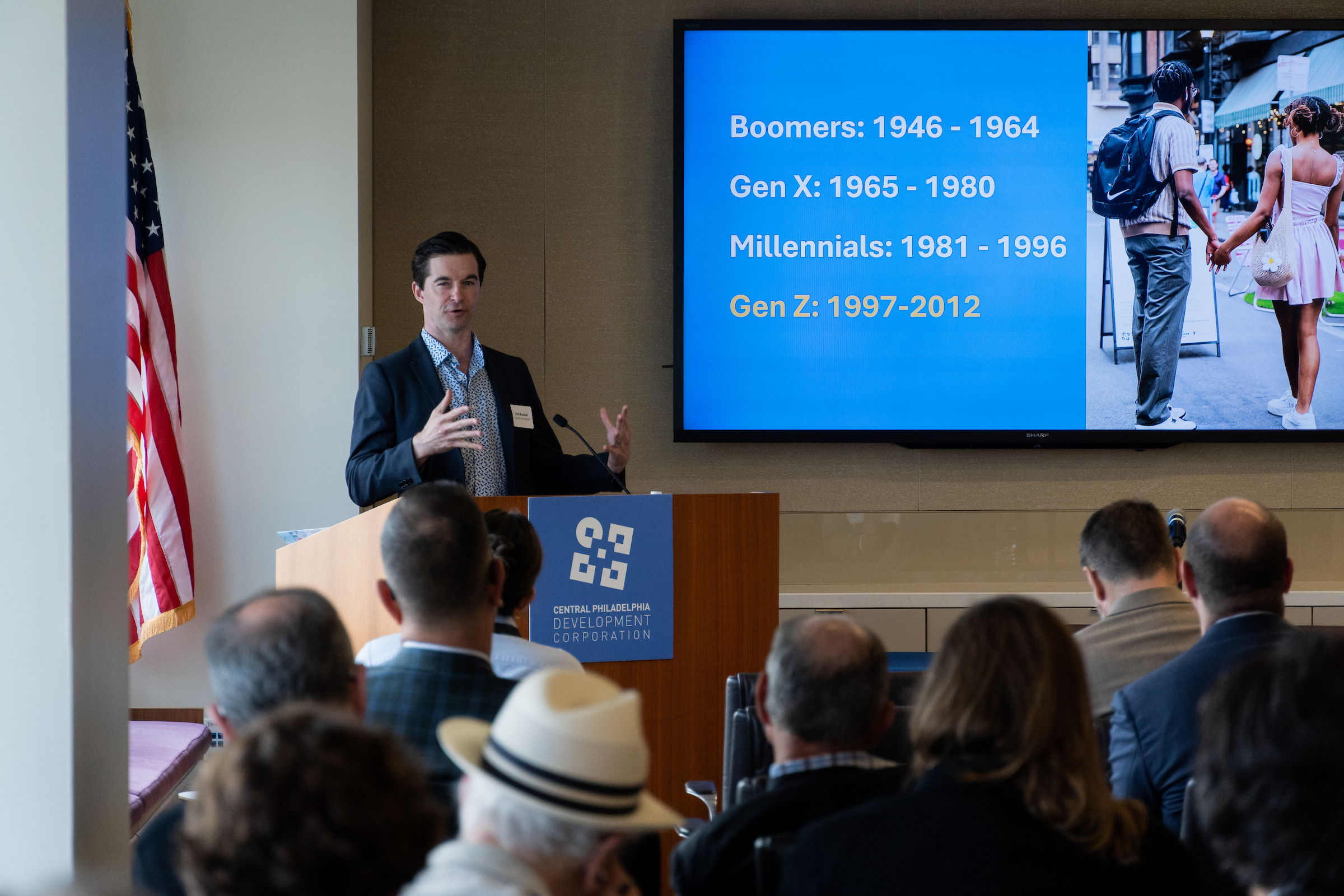
That migration sits alongside a well-documented paradox. Clint acknowledged the consistent research describing Gen Z as a group that socializes, drinks, dates, and participates in public life less than previous generations, even as they keep moving to cities. Traditional urban economics assumes a constant supply of bar patrons, concert-goers, casual shoppers, and restaurant diners, assumptions that no longer hold as neatly given the economic environment Gen Z has come up in, where the cost of everything from childcare to cocktails has outpaced wage growth.
The deeper draw, Clint suggested, is that cities can serve as antidotes to digital isolation by offering benefits such as third spaces and spontaneous encounters that dense, walkable neighborhoods make possible. What Gen Z says it wants — walkability, authenticity, diversity, public transit, flexibility, and cultural experiences — is what Philadelphia does well on. “The more digital that all of our lives become, the more valuable high-quality physical spaces become,” Clint noted.
The challenge is now conversion: how do you turn Gen Z residents who are testing out the city into people who put down roots?
The Pandemic, Flexibility, and Why the Office Still Matters
Lauren Smith opened the discussion by inviting the panelists to reflect on how the pandemic shaped their early careers. For many, flexible work is not just a recent benefit but the only professional world they have ever known. Pooja Patel of Ballard Spahr, who went straight from her final college semester into law school as COVID hit, explained that hybrid flexibility “allows employees to show up as their best selves” rather than feeling burned out, noting that when they do come in, they tend to be more present, which she views as a driver of retention. Daecia-jamé Borgia of Visit Philadelphia, a former middle-school teacher, presented a downside: when remote work opened more lines of communication, parents began calling at all hours simply because she was accessible. A hybrid mentality executed well signals that an employer values employees as individuals, she said, but healthy boundaries are what make it sustainable.
Even so, the panelists were unanimous that being in the office is a benefit, particularly early in a career. Pooja pointed to in-person mentorship and the work that finds you simply by being seen in the hallway. Phillip Butler of JLL called physical space critical to professional development and the spontaneous collaboration that adds a human touch to work, noting that even a consistent two-day-a-week routine lets colleagues learn your schedule and seek you out. For Jordan Harris of Schulson Collective, whose role keeps her moving between the group’s restaurants daily, being on-site is both a practical necessity and something she values. The recurring theme across the panel was balance.
How the Internet Builds Community
As the first digitally native generation, the panelists provided a nuanced view of the internet’s role in fostering a physical community. For Gen Z, the apps they frequent can often offer a bridge to social connection rather than just a replacement. Having experienced real isolation during a formative period, the panelists described their generation as more open to meeting new people. Phillip called it “personal connection through digital connection,” outlining the way apps, local influencers, and online groups help newcomers find their people and discover where to gather. Pooja pointed out a behavior she sees constantly: someone newly arrived in Philadelphia posting an open invitation to get a group together. Casting a suggestion for in-person socializing “into the void,” as Lauren described it, and having people actually answer and show up, feels distinctive to Gen Z and one of the things that makes the city feel accessible.
Walkability, Third Spaces, and Placing Down Roots
When asked what makes a neighborhood desirable, the panelists frequently cited walkability as a key factor. Jordan described how exploring Center City on foot as a Temple student made her fall in love with the city, and how living within walking distance of restaurants and a neighborhood bar keeps her rooted in her surroundings. The takeaway was that walkability lets young residents organically explore Philadelphia and feel in tune with their communities. On that measure, the city remains strong. Third spaces took many forms: Phillip noted a boom in gyms and “eat, work, play” fitness concepts that double as community hubs; Daecia described a beloved Northern Liberties bar where the staff know her name; Jordan pointed to citywide Quizzo nights.
That intentionality extends to spending. Daecia, who like many Gen Z is currently alcohol-free, observed that the shift away from drinking needs to be accounted for by the urban landscape. “The mocktails are still the same price as cocktails,” she said, pointing to a necessity for the market to adapt to the behavioral patterns of arriving residents.
On homeownership, the panelists described aspiration tempered by a preference for flexibility. Several said owning a home in Philadelphia feels very attainable. Jordan described friends who recently bought their first homes through a first-time-buyer program, but thought that renting remains more cost-effective during this stage of life. For a generation forming households later, the strong Philadelphia rental market offers the freedom to stay mobile while still building a life in the city.
Shaping Philadelphia for the Future
Lauren closed by asking what makes the panelists hopeful about Philadelphia’s future. Their answers centered on people and community, whether that be chosen family, the ease of building a network in a city small enough that knowing two people can feel like knowing everybody, and Philadelphia’s cultural depth and growing education and health sectors. Now that Gen Z is growing in purchasing power, renting the apartments, and moving downtown, their decisions are set to influence Center City for years to come. The panel discussion suggests that the task ahead is to continue building a more human city worth staying in.
Get involved
Interested in attending our next event? Learn how you can become a member of the Central Philadelphia Development Corporation and attend our member-only events and panels by contacting Lauren Smith, Director of Research & Special Projects, at cpdc@centercityphila.org.