report
Center City Insights: Center City’s Third Spaces
What is a third space?
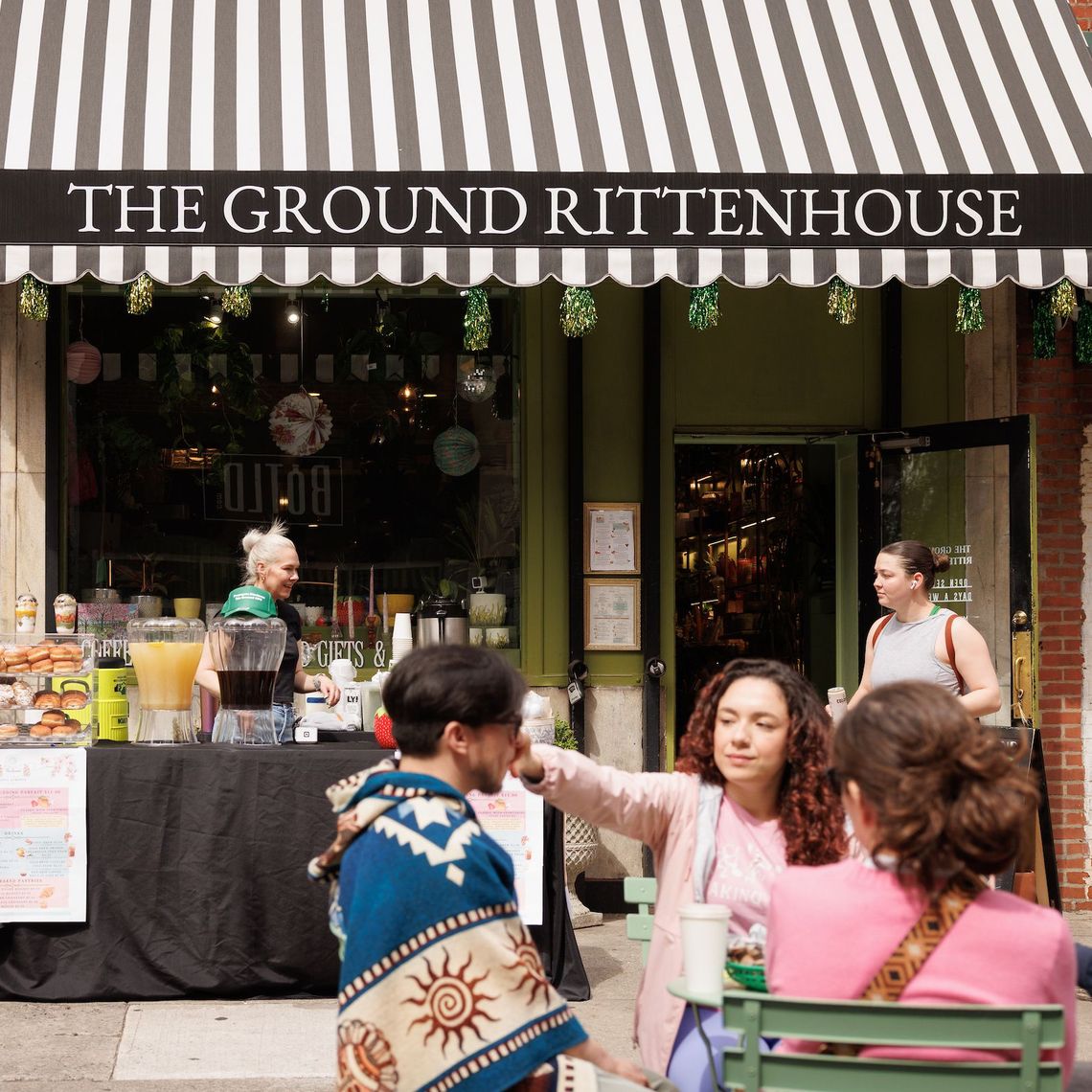
A third space is anywhere people gather outside of their home (a first space) or work (a second space). For many, third spaces are ways to find community and routine. These places can be parks, libraries, cafés, bars, bookstores, community centers, gyms, or religious institutions. Sociologist Ray Oldenburg, who coined the term, describes third spaces as being open, accessible, social, and neutral. Third spaces serve as what he calls “anchors of community life,” a place for conversation, creativity, and civic engagement.
Center City’s density and mixed-use environment create a natural ecosystem of third spaces that provide plentiful opportunities for connection and social interaction. Unlike suburban employment centers, where similar experiences are manufactured, Center City’s walkability and scale not only support quality of life but also create a competitive advantage and a wider appeal to residents and workers.
Center City Third Spaces
| Coffee Shops | 72 |
| Bars/Nightlife | 62 |
| Religious Institutions | 31 |
| Plazas | 14 |
| Gyms | 13 |
| Parks | 11 |
| Bookstores | 6 |
| Community Centers | 6 |
| Libraries | 3 |
Center City has over 200 third spaces to settle in, linger, and be around other people. Among them are 72 coffee shops between Vine and Pine streets, river to river. But what sets some recent arrivals apart is their hours. Madis Coffee Roasters, Moka & Co., and the soon-to-open Haraz Coffee House stay open well past the typical coffee shop window — the Haraz franchise intentionally stays open until 10 p.m. as an alcohol-free late-night gathering place, while the new MOTW Coffee and Pastries at 2101 Market Street stays open as late as 1 a.m.
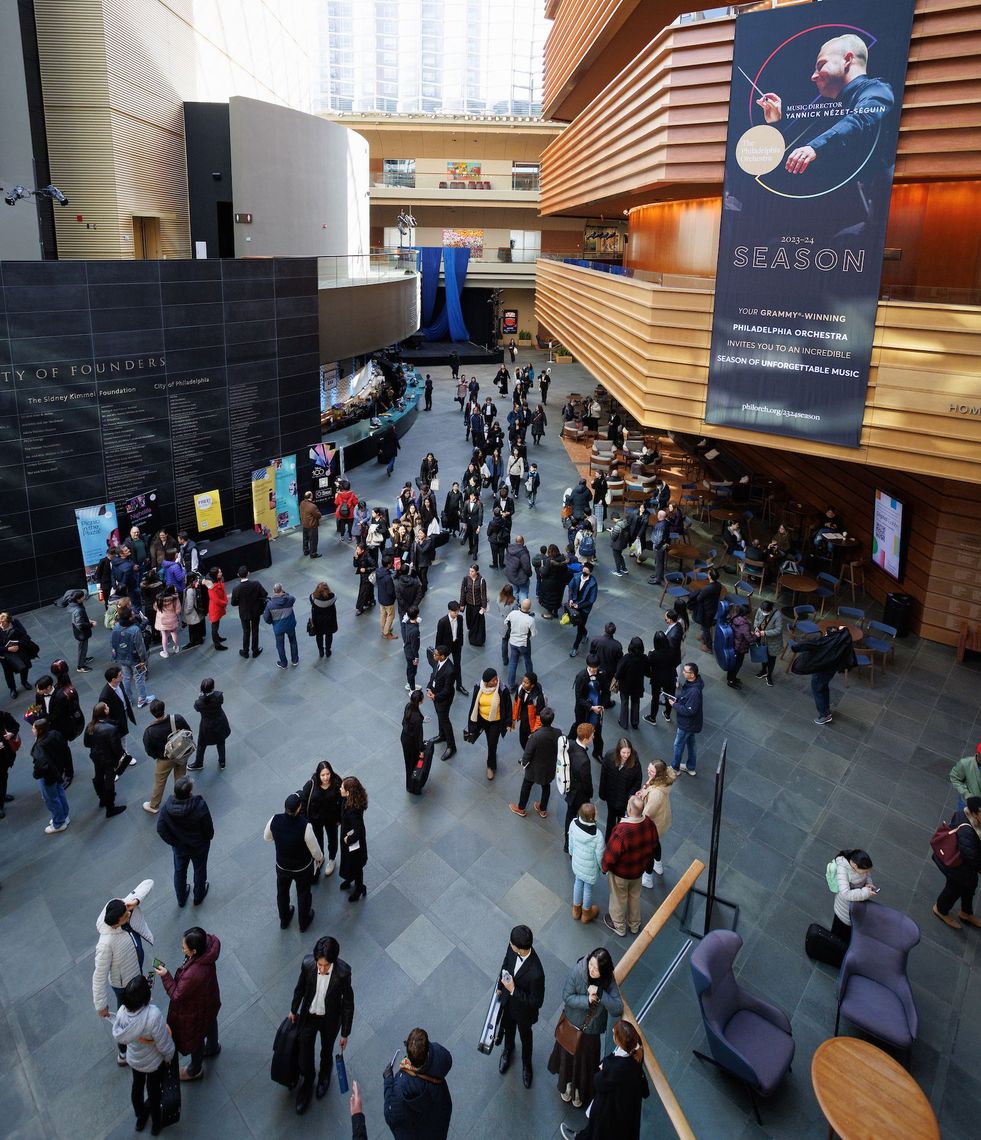
Coffee Shops in Center City
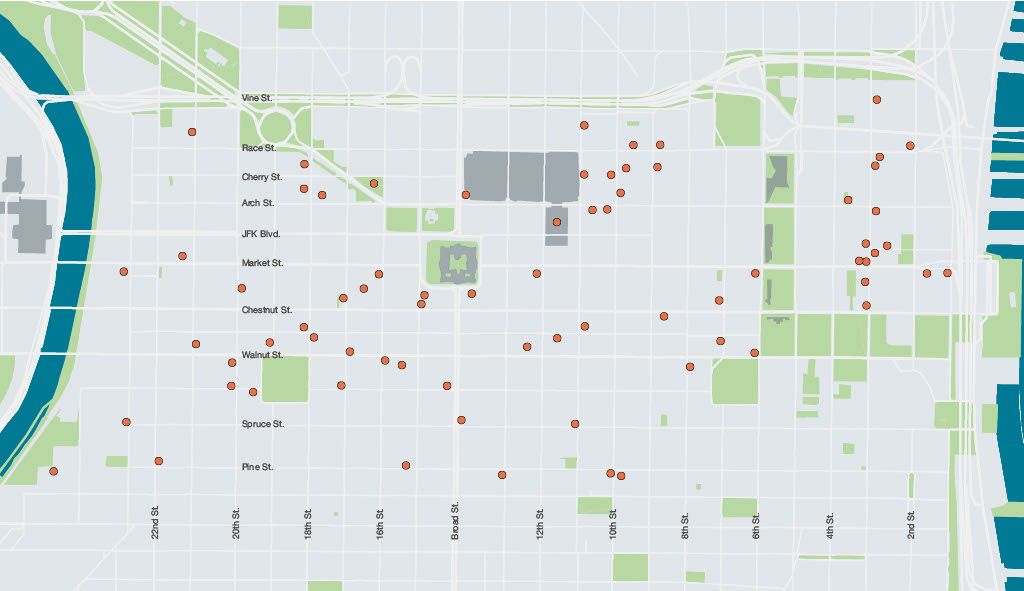
Some of Center City's third spaces are buildings that provide public space as part of their design. The Kimmel Center's soaring lobby, created as an indoor extension of street life open to everyone, is now further animated by a new café and restaurant along the Spruce Street side. On the opposite side of Broad Street, the Wilma Theater's Good Karma Café opens its lobby to the public from 7 a.m. to 7 p.m. daily, regardless of showtimes. Comcast's campus takes a similar approach, offering open-air seating, art and multimedia installations, and dining options that serve morning commuters and evening visitors alike.
Four of Center City's 11 parks are managed by CCD including Dilworth Park, a year-round destination visited by 12.9 million people last year, and Sister Cities Park, where children explore a Discovery Garden with winding pathways, scalable rocks, and a meandering stream. Rittenhouse Square remains the quintessential Center City gathering place and respite for picnickers, painters, readers, and anyone who simply needs a moment to breathe.
The Parkway Central Library offers the same open invitation indoors. A 2019 renovation transformed it from a traditional reference library into a genuine community hub, expanding publicly accessible space from 35% to 68% and adding a two-story community space, business resource centers, and a recreation center for teens. Open until 9 p.m. on most weekdays, it serves as a third space that is always free and open to everyone.
As more people seek out in-person connection after years of remote work and digital socialization, third spaces have never mattered more. Center City is exceptionally well positioned to meet that demand. With 109 third spaces within a 10-minute walk of 18th and Market, and 106 within a 10-minute walk of 12th and Walnut, there are very few locations downtown without a coffee shop, café, or gathering place nearby.
That density is difficult to replicate anywhere else in the region. In car-dependent suburbs, third spaces are spread thin — often tucked into corporate plazas or strip malls, requiring a drive to reach. In Center City, they are simply part of the fabric of daily life, woven into nearly every block and available to residents, workers, and visitors.